Your car leaves the showroom in perfect condition. The paint is flawless, the finish is immaculate, and every panel catches the light exactly as it should. Then Indian roads get to work on it – gravel on the expressway, a stray shopping trolley in the parking lot, bird droppings baking under the Delhi summer sun, and the slow, invisible creep of UV damage. Within a year, that showroom finish is a memory.
Paint Protection Film, or PPF, exists precisely to slow that process down, and for a growing number of car owners in India, it has become less of a luxury and more of a considered investment. But with so many options available and a significant price tag attached, the questions are understandable:
- What exactly is PPF?
- How does it compare to alternatives?
- Is it actually worth it for the Indian car owner?
This article answers all of that, clearly and without oversimplification.
What is PPF?
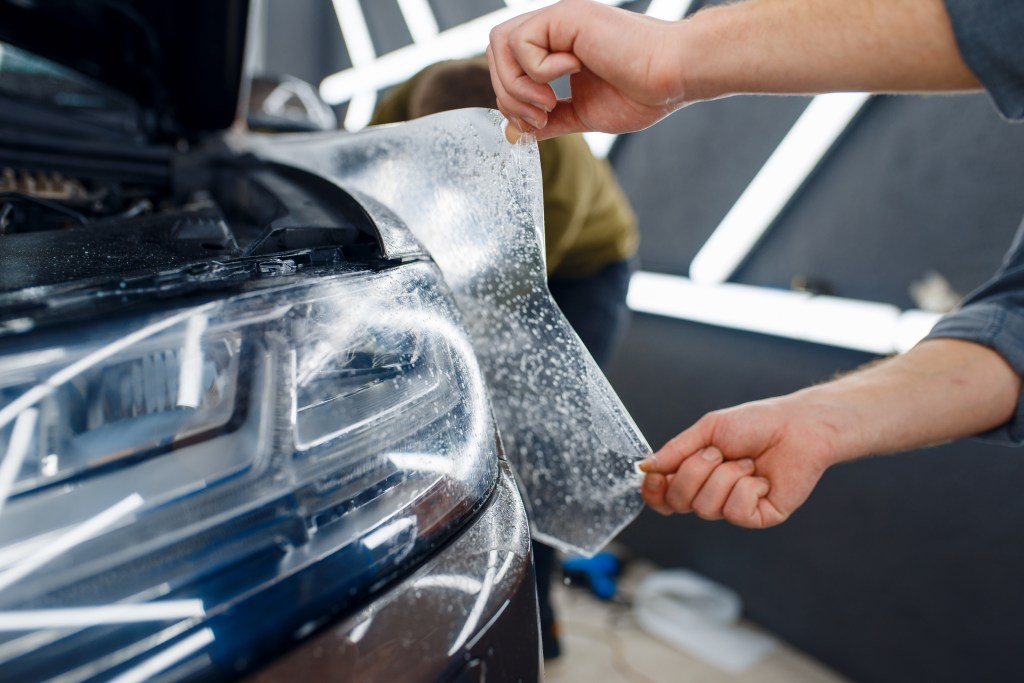
PPF is a transparent, thermoplastic polyurethane (TPU) film that is applied directly to the exterior painted surfaces of a vehicle. Think of it as a second skin – invisible to the eye, but physically present as a barrier between your car’s paint and the outside world.
The origins of the technology are, interestingly, military. PPF was originally developed for the US Army during the Vietnam War to protect helicopter rotor blades and other sensitive components from debris damage at high velocity. The automotive industry recognised its potential, and the technology has been refined significantly since then. Today’s premium PPF films are thinner, clearer, and more durable. They come with properties that the original material could never have offered.
The most significant of those modern properties is self-healing. High-grade PPF films are formulated to repair minor surface scratches and swirl marks autonomously when exposed to heat, either from sunlight or warm water. The film’s surface returns to its original smooth state without any intervention. This is not a marketing claim; it is a function of the film’s elastomeric polymer structure, which has molecular memory. Minor deformations are reversed as the material relaxes back to its original shape under thermal activation.
Beyond self-healing, a good PPF film offers:
1) Physical impact resistance against stone chips, road debris, and minor abrasions.
2) UV protection to prevent paint oxidation and colour fading.
3) Chemical resistance against bird droppings, tree sap, industrial fallout, and acidic rain – all of which are genuinely corrosive to automotive paint.
4) Hydrophobic properties on premium variants, which cause water and contaminants to bead and roll off the surface.
5) Preservation of resale value, since well-maintained paint under PPF retains far more of its original condition
PPF is applied in two ways: partial coverage, which focuses on high-impact zones such as the front bumper, bonnet, side mirrors, door edges, and headlamps; or full-body coverage, which extends the protection across every painted panel. The choice between the two largely depends on your budget and how you use your car.
PPF vs. Ceramic Coating vs. Vinyl Wrap: Understanding the Difference
This is where most car owners get confused, and it is worth being precise about what each solution does and does not do.
PPF is a physical barrier. It absorbs kinetic impact. When a stone chip hits a PPF-covered bonnet, the film takes the damage, not the paint beneath it. This is the defining characteristic of PPF and the primary reason it commands a higher price than the alternatives.
Ceramic coating is a liquid polymer that is chemically bonded to your car’s paint surface to form a hard, semi-permanent protective layer. It excels at repelling water and contaminants, offers UV resistance, and makes the car significantly easier to clean. What it does not do is provide meaningful physical impact protection. A stone chip will go through the ceramic coating and damage your paint. Ceramic coating protects against what lands on your paint; PPF protects against what hits it.
Vinyl wrap is primarily an aesthetic product. It changes the colour or finish of your car. It offers minimal paint protection relative to PPF, and from a long-term value perspective, it functions more as a styling choice than a protective investment.
The practical implication for car owners is this: PPF and ceramic coating are not competing products so much as complementary ones. Many detailing professionals recommend applying a ceramic coating on top of PPF – you get the physical impact protection of the film combined with the hydrophobic and UV benefits of the coating, while also making the PPF itself easier to maintain and extending its lifespan.
How to Maintain PPF and Keep It Performing
PPF is a protective investment, but it requires maintenance to remain effective and aesthetically clean throughout its lifespan.
1) Washing: Avoid automatic car washes with rotating brushes, which can create micro-abrasions on the film surface over time. Hand washing using a pH-neutral car shampoo and a soft microfibre mitt is the recommended approach. Rinse thoroughly, as soap residue left at film edges can cause lifting over time.
2) First 48 hours post-installation: Do not wash the car or expose it to heavy rain. The adhesive needs time to fully cure to the paint surface. Avoid high-pressure water jets directed at film edges during this period.
3) Bird droppings and tree sap: Remove these promptly. Although PPF provides chemical resistance, prolonged exposure to highly acidic contaminants can still degrade the film’s surface. A quick wipe with a clean, damp cloth followed by a detailing spray is sufficient for fresh contamination.
4) Avoid contact with petrol and solvents: Fuelling spills should be wiped up immediately. Solvent-based cleaners should never be used on PPF, as they can damage the film’s topcoat and compromise its self-healing properties.
5) Annual inspection: Have your PPF inspected by a professional at least once a year. They can identify edge lifting, contamination trapped beneath the film, or areas where the film may need to be replaced before the issue compounds.
6) Ceramic coating over PPF: If you opt for a ceramic coating over your PPF, maintenance becomes considerably easier. The hydrophobic layer keeps the film cleaner for longer and makes washing faster and less abrasive.
Conclusion
PPF is not an indulgence. It is a technically sound, long-term protective measure for your vehicle’s paint. In the context of Indian roads, weather conditions, and the significant financial investment a car represents, it is one of the more rational expenditures a car owner can make. The key is choosing the right grade of film, covering the right areas, and having it installed by a qualified professional whose work you can trust.
A poorly installed PPF is worse than no PPF at all. Bubbling, edge lifting, and trapped contamination can damage paint rather than protect it. Certification, installer experience, and workshop standards matter as much as the film itself.
Thinking about PPF for your car?
Come speak to the experts at Grease Monkey, Gurugram. Our team will assess your car, recommend the right level of protection for your usage and budget, and install it to the highest professional standard. Get in touch with us today for a consultation.

 Grease Monkey
Leave a comment